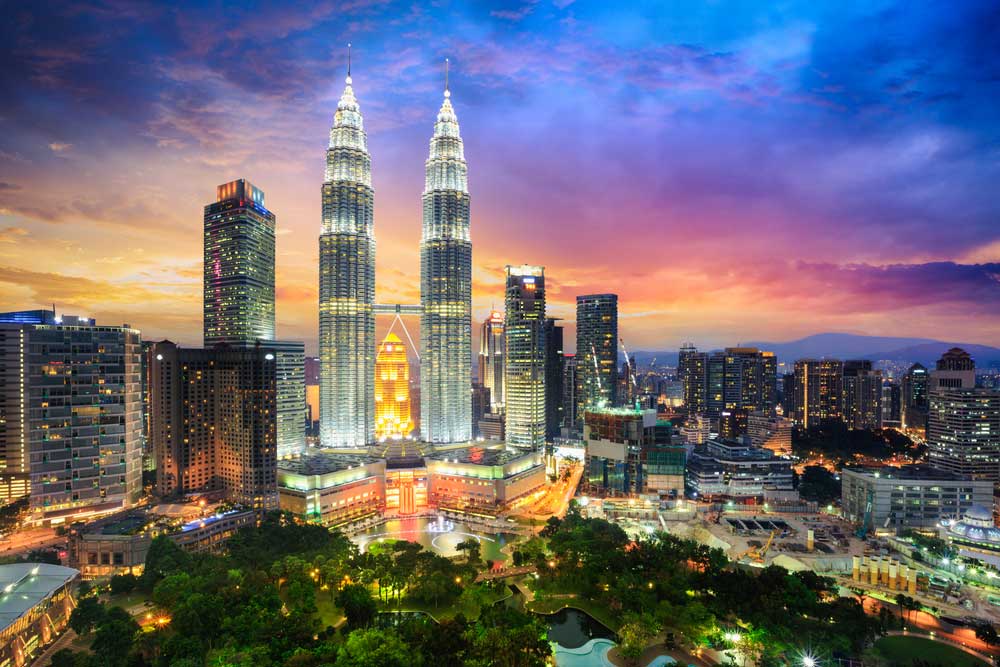
In conversations about Asian plastic surgery, South Korea and China tend to dominate. Malaysia rarely gets the same attention, yet it may be home to one of Southeast Asia’s most interesting and diverse aesthetic industries.
The country is not shaped by a single national beauty ideal, but rather by the intersection of its Malay, Chinese and Indian communities, each with its own features and preferences. Add a fast-growing, government-backed medical tourism industry to that cultural mix, and you have a market that is maturing quickly and poised to become a larger player on the world stage.
So how did plastic surgery take root in Malaysia, and what does it look like today? Let’s take a closer look.
What Is the History of Plastic Surgery in Malaysia?
Malaysia’s plastic surgery story begins, as it does in much of Asia, with reconstruction rather than cosmetics. In the early 1960s, the Chief of Surgery at Kuala Lumpur General Hospital, Dr S M A Alhady, began inviting overseas specialists to operate and teach. One of them, a plastic surgeon from Florida named Dr Bernard Morgan, saw enough potential to take two local trainees, Dr V Sivaloganathan and Dr S Kandiah, into his residency programme in the United States.
According to the Malaysian Association of Plastic, Aesthetic and Craniomaxillofacial Surgeons (MAPAC), Dr Sivaloganathan returned from the United States in 1969 as Malaysia’s first qualified plastic surgeon. Dr Kandiah followed soon after, and on 13 July 1970, he established Malaysia’s first dedicated plastic surgery clinic in a converted garage, working with a single hospital attendant. Much of his early work was reconstructive, including hand surgery and facial reconstruction for leprosy patients. Demand for his services quickly skyrocketed.
A major breakthrough for Malaysian plastic surgery came in May 1974, when Dr Kandiah established the country’s first standalone Plastic and Reconstructive Surgery Department. That same year, he launched a mobile outreach programme called Operasi Pembedahan Plastik Pantai Timur to bring reconstructive expertise to underserved regions of Malaysia.
With the department and outreach program in operation, the development and expansion of the country’s plastic surgery services greatly accelerated. Dr Kandiah was instrumental in training the next generation of Malaysian plastic surgeons and setting the stage for further expansion of the specialty.
How Did Plastic Surgery Become Established in Malaysia?
As the specialty grew from a handful of pioneers into a professional community, it needed a governing body. The country’s eight practising plastic surgeons at the time founded the Malaysian Association of Plastic Surgeons (MAPS) in 1984. Later, the organisation broadened its scope and its name to become MAPACS, a reflection of the reconstructive, aesthetic and craniomaxillofacial work developing under one professional roof.
Structured local training followed, with Universiti Sains Malaysia launching a plastic surgery programme in collaboration with the Ministry of Health in 2001. Many Malaysian surgeons also trained abroad in the UK or Australia, bringing international techniques home and helping the specialty develop a strong reputation for clinical standards.
How Popular Is Plastic Surgery in Malaysia Today?
Malaysia now sits among Southeast Asia’s busier aesthetic markets. The 2024 survey from the International Society of Aesthetic Plastic Surgery (ISAPS) reports roughly 30,900 cosmetic procedures performed by plastic surgeons in Malaysia in 2024 (around 19,700 surgical and 11,200 nonsurgical).
Demand is driven largely by younger, urban patients. A 2021–2022 study published in Malaysian Family Physician surveyed Malaysians on their views of medical aesthetics. Encouragingly for the industry, more than 70% held positive attitudes toward aesthetic treatments, even though most had never had one.
What Is Driving the Growth of Plastic Surgery in Malaysia?
Several forces are pushing the Malaysian plastic surgery market forward at once.
Economic Growth
Rising incomes and an expanding middle class have made elective procedures accessible to a far broader population than a generation ago. Aesthetic treatment is increasingly viewed as ordinary self-care among urban professionals rather than a luxury reserved for the wealthy.
Social Media
Platforms like Instagram and TikTok have reshaped beauty expectations, and Malaysian patients frequently cite social media as their main source of information when researching procedures. Influencer culture and regional trends like “glass skin” have done a great deal to normalise both surgical and nonsurgical enhancement, particularly among younger people.
Medical Tourism
The Malaysia Healthcare Travel Council reports that the country welcomes 1.85 million healthcare travellers annually. Kuala Lumpur, Selangor and Penang are the country’s major hubs, with care typically priced well below Singapore or Western countries. Aesthetics ranks among the top treatment categories for medical tourism.
What Is the Attitude Towards Plastic Surgery in Malaysia?
Malaysians are warming towards plastic surgery overall, but there is evidence that religion plays a major role in individual levels of acceptance. The Malaysian Family Physician study found that Buddhist and Hindu respondents tended to view aesthetic services more favourably than Muslim respondents. The result is a plastic surgery industry where openness and discretion coexist, varying from one community to the next.
What Are the Most Common Plastic Surgery Procedures in Malaysia?
Like much of Asia, Malaysia’s surgical demand is led by the face. ISAPS survey data shows eyelid surgery was the single most common surgical procedure in 2024, ahead of scar revision, facial fat grafting, breast augmentation and liposuction.
Current trends favour natural-looking results rather than the more dramatic, Westernised changes of earlier decades. In rhinoplasty, for example, Malaysian plastic surgeons increasingly use the patient’s own tissue to refine the bridge and tip while keeping the face in proportion. Facial fat grafting and bone contouring are also widely requested for reshaping and rejuvenation.
What Are the Most Popular Nonsurgical Treatments in Malaysia?
On the nonsurgical side, Malaysia looks much like any mature urban aesthetics market. Anti-wrinkle injections lead in popularity, followed by dermal fillers, laser resurfacing, skin tightening treatments and hair removal. A strong regional trend toward injectable “skin boosters”, designed to improve hydration and skin quality, has also taken hold.
How Do Beauty Standards Differ Across Malaysia’s Ethnic Groups?
Malaysia’s cultural diversity is reflected in the differing aesthetic preferences of its three major communities. A 2024 study in the Journal of Cosmetic Medicine surveyed Malay, Chinese and Indian women on their facial preferences and found that ethnicity was significantly associated with two features in particular: facial shape and the nose. Malay and Chinese women tended to prefer a narrower nose, whereas Indian women leaned toward a broader one.
The study also found shared ground. Preferences for an upper eyelid crease and an epicanthal fold, for instance, did not differ significantly by ethnicity. An oval face shape was favoured across all three groups.
Is Plastic Surgery Safe in Malaysia?
Malaysia’s formal plastic surgery sector is well-regulated by the Ministry of Health. Practitioners offering aesthetic medicine must be registered and hold a Letter of Credentialing and Privileging. Invasive surgery is reserved for board-certified specialists, facilities must be licensed and aesthetic advertising requires approval from the Medicine Advertisements Board.
However, there is also a grey market for aesthetic services. Strong demand and price sensitivity have drawn some patients toward unlicensed beauty premises imitating medical clinics, sometimes with serious consequences. A widely reported 2023 case, in which a woman died after an alleged breast-enhancement procedure at a beauty centre, prompted the Health Ministry to reiterate that no beauty centre is authorised to perform surgical or invasive aesthetic procedures.
As with any medical tourism destination, there are also practical risks to weigh: long-haul travel raises the chance of blood clots, follow-up care is harder to arrange from afar, language barriers can make it difficult to communicate effectively, and legal recourse can be limited if something goes wrong.
Reputable, well-trained surgeons certainly exist in Malaysia, but doing your due diligence is essential, and there are many reasons to consider staying home in Australia instead.
Discover Malaysian-Inspired Plastic Surgery in Sydney
If Malaysia’s approach to aesthetics appeals to you but you’d rather not travel abroad, Asian Plastic Surgery offers a way to access that expertise close to home. Our specialist plastic surgeons combine a deep understanding of diverse Asian features and beauty ideals with Australian medical standards and regulatory protections.
To request a consultation, contact Asian Plastic Surgery on (02) 8962 9388 or fill out our enquiry form today.
Categories: